What to Do When Your Car Overheats in Ottawa
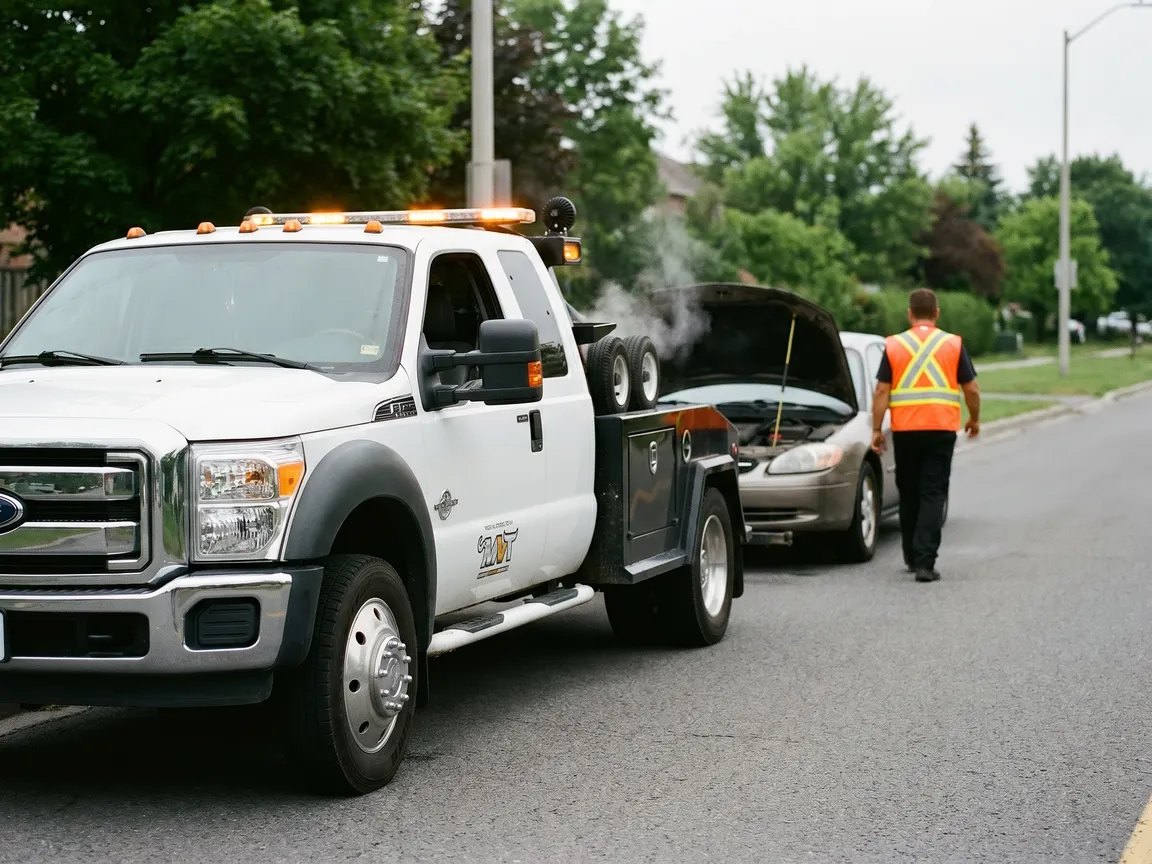
Pull over. Turn off the engine. Wait at least 15 minutes before touching anything under the hood. That's the short answer — and it's the right one. Engine overheating is one of the most common causes of summer breakdowns in Ontario, and most of the damage happens when drivers push through instead of stopping. Here's what MVT dispatchers actually tell callers when this comes up.
What does an overheating car look, smell, and feel like?
The temperature gauge is your first signal. On most vehicles, the needle sits just below the midpoint during normal driving. Anything pushing into the upper quarter is a warning you shouldn't ignore.
Steam rising from under the hood is coolant vaporizing. It looks white and smells faintly sweet. Engine oil burning on hot metal smells sharper, almost acrid. Either means pull over now, not at the next light.
Other things to watch for:
- Temperature needle climbing toward the red zone
- The A/C blowing warm suddenly (many cars shut down the compressor to reduce engine load)
- Engine feeling sluggish or starting to knock
- A thermometer warning light on the dashboard
Any one of these is enough reason to act. You don't need all of them at once.
What should I do the moment I notice the temperature rising?
Turn off the A/C and switch the heater to full blast. It sounds backwards, but the heater core is essentially a second radiator. It draws heat off the coolant loop and releases it into the cabin. On a short run, this can buy you a couple of minutes to reach a safer spot.
Get off the road as soon as it's safe. The 417 shoulder works in a pinch; a residential side street in Barrhaven, Kanata, or Orleans gives you more room to work. Congestion on Carling Avenue in July can tempt you to push through to the next exit. Don't. Once stopped, engine off and hazards on.
Then wait.
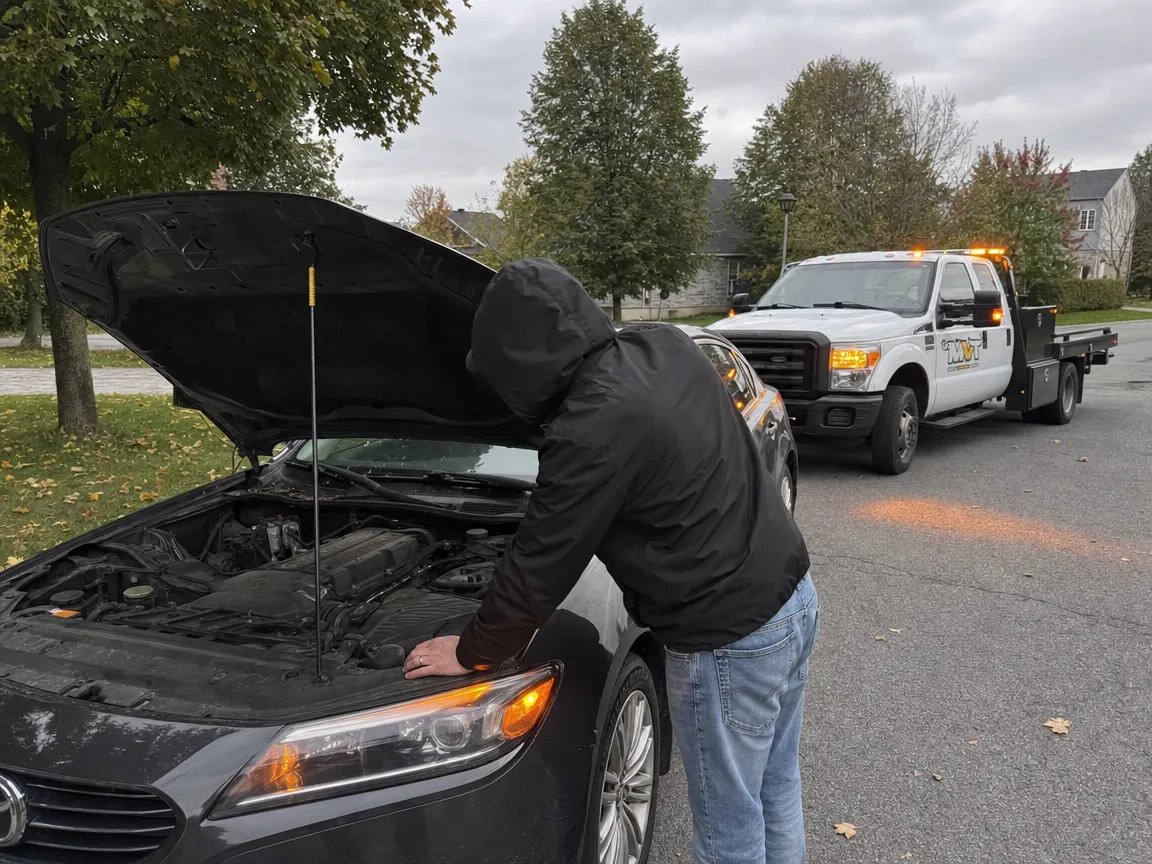
How long should I wait, and what do I check once the engine cools?
Fifteen to twenty minutes minimum. The cooling system runs under pressure, which raises the coolant's boiling point well above 100°C. Open the radiator cap while things are still hot and you risk a face full of scalding steam. It's not worth rushing.
Once enough time has passed, feel the radiator cap. If it's cool, wrap a cloth around it and turn it slowly to bleed off any remaining pressure before removing it entirely.
Check the coolant reservoir, the translucent plastic tank mounted near the radiator. If the level is below the minimum mark, a top-up with a 50/50 mix of antifreeze and water can get you moving again. Plain water works as a short-term patch. Get it properly flushed and mixed at a shop soon after.
If the reservoir is already full, or if the coolant looks milky or oily, the problem runs deeper: a failed water pump, a cracked hose, a stuck thermostat, or a leaking head gasket. None of those are roadside repairs.
Also check under the car. A puddle of bright green, orange, or pink liquid under the engine bay means coolant is leaking. Stop there and arrange a tow.
When should I stop trying and call a tow?
Call us if any of these apply:
- The temperature climbs again within a kilometre of restarting
- Coolant is visibly leaking under the car
- There's a rhythmic knock or ticking after the engine cools
- The coolant looks milky or discoloured
- You're not confident the car is safe to move
Driving a severely overheated engine is how a simple hose replacement turns into a head gasket job, one of the most expensive engine repairs there is. The tow is almost always the cheaper call. We're at 613-262-6912, available 24/7. If you're stranded anywhere in Ottawa, from Stittsville to Orleans, we'll come to you.
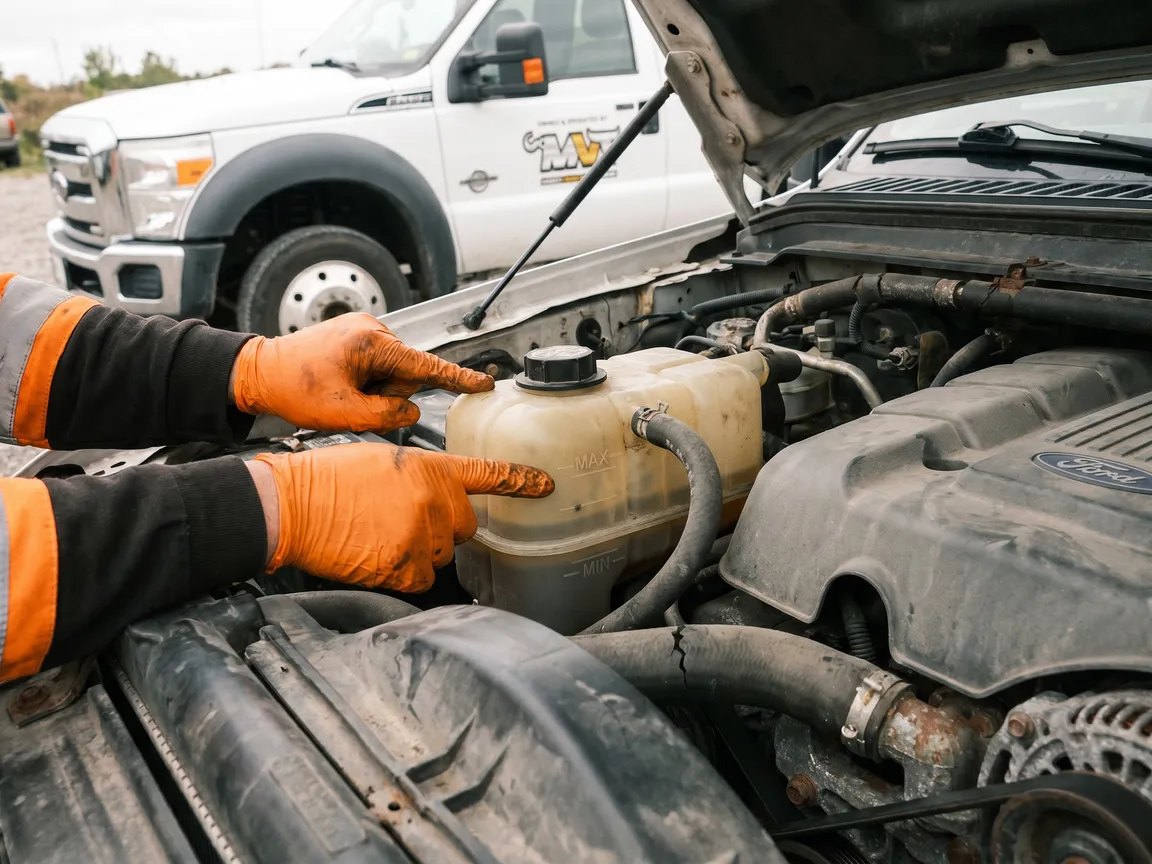
How can I prevent this on Ottawa's summer roads?
Most summer overheats trace back to coolant that's low, old, or contaminated. A few checks before July heat sets in:
- Check coolant level monthly when the engine is cold
- Inspect hoses and belts for cracks, soft spots, or glazing
- Turn the A/C off if the temperature gauge starts climbing in slow traffic or on steep hills
- Watch the gauge more closely on long drives, especially heading down the 416 or out on Highway 7
Get the cooling system flushed and refilled on schedule. Most manufacturers recommend every two years or 50,000 km. Check your owner's manual for your specific vehicle. It's a modest service that prevents a lot of roadside calls, and catching a worn-out thermostat or a softening hose before it fails beats dealing with it on the side of Baseline Road in August.
If you do end up stuck, contact us and we'll be there.